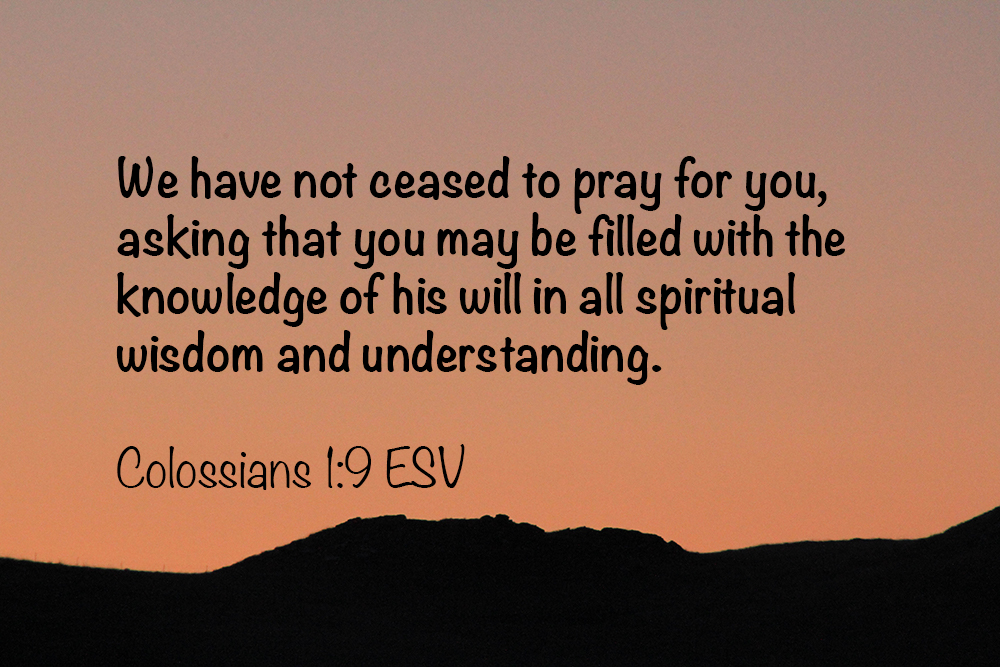
What Paul is praying for in Col 1:9 goes far beyond just being acquainted with biblical information or even memorizing it. Instead, Paul wants those in Colossae to be filled with it or made complete in it. The verb for filled is in the passive, which means that Paul is praying that God would do this filling, since we are completely incapable of following God’s will in our own strength and wisdom. So, when one is filled with or made complete by God in this kind of knowledge then that person is living out what he knows. It follows then that any knowledge of God, any thoughts or contemplations of God that do not result in faith-filled adherence to God’s will are virtually pointless. We cannot even say we love God if we do not have this kind of obedience, according to 1 John 5:3. No matter what situation we find ourselves in, whether at home, work or anywhere else, God has provided instruction at least at the attitudinal level, if not the associated required actions. Therefore, how we live, rather than what we say we know, is the indicator of possessing the real knowledge of God.
The knowledge that Paul is referring to is further modified by the prepositional phrase that follows, in that this knowledge is in or with respect to all spiritual wisdom and understanding. Spiritual in this context of Colossians is that which is from the Spirit, which is in direct contrast to so-called wisdom that comes from any other source, whether within oneself or some other outside source apart from the Spirit-inspired Scriptures. Wisdom is a very important concept in this epistle and can be defined as knowledge put into practice. It is godward in focus and consists largely of the person and work of Christ, in whom are all the treasures of wisdom (1:28, 2:3). This wisdom is directly opposed to the so-called wisdom of self-atonement mentioned in 2:23. Thus spiritual wisdom is counter-cultural, counter to the flesh and counter to natural reason, and in Paul’s writings, it is in stark contrast to the wisdom of the world, wisdom of man and wisdom of this age (1 Cor. 1-3). The Greek culture worshipped human reasoning, so the early church was perpetually being tempted to try to merge the message of Christ with the thinking of the world. When doing this, they were ignorant to the fact that all wisdom is contained in God’s truth and namely in Christ. Even in our day, we must be aware that understanding and living out God’s will requires, not only salvation in Christ alone by faith alone, but also spiritual illumination and this quest to live out God’s will, will often be unpopular or ridiculed even amidst mainstream Christian circles.
Next, Paul wants this filling of the real knowledge of God’s will to not only be in wisdom, but in all understanding. If wisdom is knowledge put into practice, understanding is comprehending the significance of knowledge. These two descriptors are crucial since there is no real knowledge without the accompanying wisdom and understanding. However, if we were to try to differentiate these words and turn them into steps of following God’s will, it would look like the following: We must begin by hearing or reading the will of God in his word; Next, we must understand the will of God by comprehending its significance for our lives and lastly, we must implement wisdom by putting what we have heard and comprehended into practice. This is the dividing line between knowledge of his will in all spiritual wisdom and understanding and merely knowing some things about God or about the Bible. We can’t honestly say we have knowledge of God nor can we say we are wise and understanding if we fail to consistently do the will of God.
The Need for Insightful Knowledge that Should Guide our Prayers